
Discover 5 pregnancy-safe exercises to stay fit and healthy. Learn how walking, yoga, swimming, and more can support your body during all trimesters.
Pregnancy is a beautiful journey, but it comes with physical changes that can affect your energy, flexibility, and comfort. While rest is important, staying active during pregnancy has many benefits for both the mother and the baby. The key is to choose the right kind of movements—safe, gentle, and effective.
In this article, we will explore 5 safe movements for pregnant women, recommended by doctors and physiotherapists. These can help you stay fit, reduce stress, ease common pregnancy pains, and prepare your body for childbirth.
Note: Always consult your doctor before starting any exercise during pregnancy, especially if you have any complications or health concerns.
1. Walking
Safe in All Trimesters
Walking is one of the simplest and safest forms of exercise during pregnancy. It improves cardiovascular health, keeps your body moving, and doesn’t strain your joints.
Benefits:
- Boosts energy levels
- Reduces risk of gestational diabetes
- Helps in maintaining a healthy weight
- Improves mood and sleep
Tips:
- Wear comfortable shoes with good support
- Stay hydrated and avoid walking in extreme heat
- Maintain a moderate pace, especially in the third trimester
2. Pelvic Tilts
Great for Lower Back Pain
Pelvic tilts are gentle exercises that strengthen the lower back and abdominal muscles. These movements are especially helpful in the later stages of pregnancy when back pain becomes more common.
How to Do:
- Lie on your back with knees bent and feet flat (in early pregnancy) or on all fours (in later pregnancy).
- Gently tilt your pelvis upward by tightening your abdominal muscles.
- Hold for a few seconds, then relax.
- Repeat 10–15 times.
Benefits:
- Strengthens core muscles
- Reduces back pain
- Improves posture
Modification: In the third trimester, do pelvic tilts in a standing or hands-and-knees position to avoid lying flat on your back.
3. Prenatal Yoga
Improves Flexibility and Relaxation
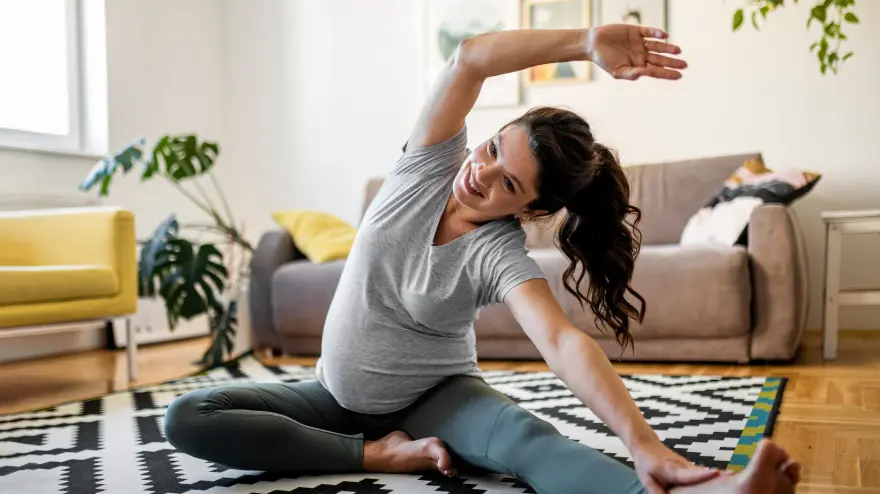
Prenatal yoga is specially designed for pregnant women. It focuses on gentle stretching, breathing, and relaxation techniques. It helps you stay flexible and calm throughout your pregnancy.
Benefits:
- Reduces stress and anxiety
- Increases flexibility and balance
- Strengthens muscles needed for childbirth
- Promotes better breathing and circulation
Popular Yoga Poses for Pregnancy:
- Cat-Cow Stretch
- Butterfly Pose
- Warrior II
- Side Angle Pose
Avoid: Deep twists, backbends, or lying on your belly. Always follow guidance from a certified prenatal yoga instructor.
4. Swimming and Water Exercises
Low Impact and Full Body Workout
Swimming is one of the best exercises during pregnancy because the water supports your weight, reducing stress on your joints and muscles. It’s ideal for women who experience back pain or swelling.
Benefits:
- Strengthens the entire body
- Keeps you cool and reduces swelling
- Eases back and joint pain
- Safe for all trimesters
Tips:
- Choose clean, well-maintained pools
- Avoid diving or jumping into water
- Wear a proper swimsuit that supports your belly
5. Kegel Exercises
Strengthens Pelvic Floor Muscles
Kegel exercises are small but powerful movements that target the pelvic floor—the muscles that support your uterus, bladder, and bowels. Strong pelvic floor muscles can help during labor and recovery.
How to Do:
- Tighten the muscles you use to stop urine flow.
- Hold for 5–10 seconds, then relax.
- Repeat 10–15 times, three times a day.
Benefits:
- Prevents urinary incontinence
- Speeds up postpartum recovery
- Supports organs during pregnancy
Tip: Avoid doing Kegels while urinating to prevent incomplete bladder emptying.
Additional Tips for Safe Pregnancy Exercise
- Warm up and cool down before and after any activity.
- Stay hydrated and take breaks when needed.
- Avoid high-impact exercises like jumping or contact sports.
- Listen to your body—if something feels uncomfortable, stop immediately.
Final Thoughts
Staying active during pregnancy doesn’t mean pushing your limits. It means moving your body in ways that support your changing needs. The five movements listed above—walking, pelvic tilts, prenatal yoga, swimming, and Kegels—are safe, gentle, and effective for most pregnant women.
By choosing the right movements and staying consistent, you can enjoy a healthier, more comfortable pregnancy and prepare your body for a smoother delivery.
Disclaimer: Always consult your gynecologist or healthcare provider before beginning any exercise routine during pregnancy.
Also Read When to Switch From Dieting to Muscle Gaining Without Getting Fat
Author-Sonam